The modelling platform behind our advice
Our platform structures downstream CCS logistics into one connected model: volumes, routes, modes, hubs, terminals, storage interfaces, cost and constraints. Clients receive their results here.
Our platform runs inside our advisory engagements, not as a self-serve product.
From fragmented inputs to a clear decision baseline
Downstream CCS logistics depends on many moving parts. Our platform brings them into one structured baseline, so teams can compare options, test sensitivities and align.

Fragmented inputs. Structured analysis. Clear decisions.
The whole network, end to end
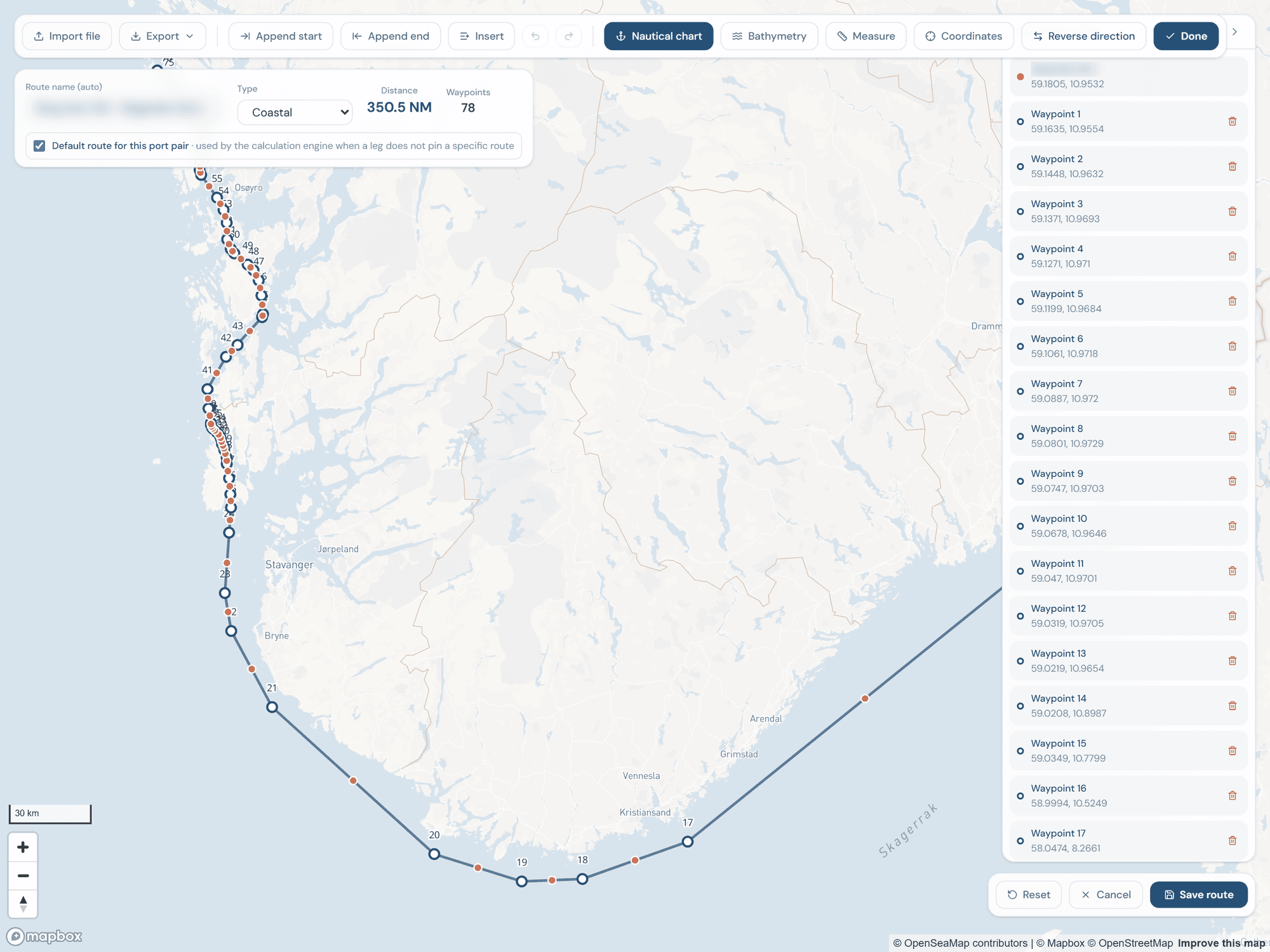
CCS logistics performance depends on how sources, routes, terminals, hubs, buffers, assets and storage interfaces work together as one system. Front Carbon connects these elements in a structured network model, making it easier to compare logistics options, expose bottlenecks and align stakeholders around the same system view.
Illustrative network
Independent decision support, made tangible
Our platform turns downstream CCS logistics into decision outputs: cost, network, assets, scenarios and reporting.
Cost across the chain
Where cost is created: conditioning, loading, transport, terminals, hubs, buffers and storage, in one comparable baseline.
A shared network view
Sources, routes, terminals, hubs, buffers, assets and storage in one connected model, so dependencies and bottlenecks are visible.
Route, mode and asset requirements
Compare ship, pipeline, truck and rail on the same logic, and see how route and asset choices affect cost, capacity and risk.
Ramp-up and development pathways
How the chain develops over time: changing volumes, ramp-up, seasonality, new sources, hubs and storage.
Scenario and sensitivity insight
How the chain performs when assumptions change, so you can find exposure and the measures that reduce it.
Decision reports and client portal
Structured reports and a client portal, so stakeholders share one baseline instead of scattered spreadsheets.
Who the platform is built for
Built for stakeholders shaping CCS value chains
A structured, independent view of downstream CCS logistics for emitters, developers, infrastructure providers, logistics partners and investors.
Emitters
For emitters assessing CCS: compare logistics and storage options, understand cost-to-serve, and build a basis for procurement and FID.
Project developers & T&S providers
For developers, hubs and T&S providers: structure customer cases and test how volumes, capacity and timing interact across direct, hub and hybrid solutions.
Transport & logistics providers
For shipowners and logistics providers: turn incomplete customer cases into structured options, with route, fleet, buffer and service requirements.
Investors & diligence teams
For investors and diligence teams: challenge assumptions, find bottlenecks, and judge whether the logistics hold up.
Evidence from real CCS case work
Built from real CCS case work and market insight
Our platform is strengthened through completed studies, route and cost analyses, and market dialogue. Each engagement improves the data behind the next.
How market dialogue informs the platform
Independent by design, grounded in the market
We keep our platform honest through market dialogue with technology providers, shipowners, operators and infrastructure developers. We use it to validate assumptions, not to sell anyone’s hardware.
Technology providers
Liquefaction, conditioning, cargo handling, buffer storage and monitoring are configurable in the model. We engage providers to keep assumptions aligned with real equipment.
Get in touch →Shipowners and logistics operators
Vessel availability, cargo capacity, port constraints and turnaround times drive realistic logistics. We engage operators to validate transport logic.
Get in touch →Infrastructure developers
Hubs, terminals and storage sites set the practical limits of a chain. We engage developers to reflect real capacity, timing and interfaces.
Get in touch →Let’s put your project through the model
Share your project context, CO₂ volumes, locations and key constraints. We will help you frame the downstream logistics question, identify the most relevant scenarios and define the right next step.